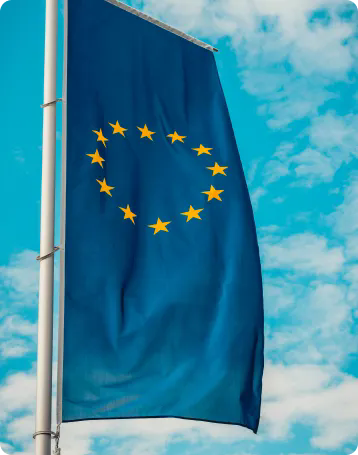
Types of Legal Giveaway in the EU
There are several types of sweepstakes and contests in Europe, each with its legal characteristics and mechanisms. The differences between them mainly concern the methods of participation, the mechanism for selecting the winner, and the presence of an element of payment or skill. Below are the main types of sweepstakes popular in Europe.
This is the most common type of giveaway, in which the winner is selected at random. Participation is usually free and does not require a purchase. You can participate by fulfilling simple conditions, such as subscribing, liking, registering, etc.
Features of the sweepstakes:
Random selection of the winner
The winner is determined by a software method or by drawing lots. This excludes any element of skill or evaluation.
No mandatory costs
Participation must be free of charge. The presence of a paid element can turn the promotion into an illegal lottery.
Transparency of conditions
The conditions of participation and rules (including, for example, subscription to a newsletter) must be clearly described. Subscription may be mandatory or voluntary — this is important to reflect in the rules.
Legality in different jurisdictions
In some countries, such as Spain, the draw must take place within the country. Registration or notification of local authorities may be required.
Verifiability of the procedure
It is recommended to use notarized instruments or certificates of integrity to confirm the objectivity of the selection.
A raffle is a lottery in which participation is purchased through the purchase of a ticket or product. The winner is also selected at random.
Features of the raffle:
Paid participation
A ticket purchase or contribution is required. This distinguishes a raffle from a sweepstake.
Regulation and licensing
In most European countries, raffles are regulated by gambling laws. A license or registration may be required to organize a raffle, especially if it is for commercial purposes.
Restrictions for individuals
Private or non-commercial raffles (e.g., school charity events) are permitted in some countries but are often limited in terms of prize amounts and audience.
Transparent reporting
It is important to record the number of tickets sold, the random method used to determine the winner, and the publication of the results.
In these contests, participants compete by performing tasks (creative, intellectual, athletic, etc.), and the winner is determined based on the quality of the work performed.
Features of the raffle:
Skill-based evaluation
The winner is not determined by chance, but by the level of task completion. These can be contests for the best photo, essay, video, etc.
Jury and evaluation criteria
The evaluation is carried out by a competent jury, whose details and qualifications should preferably be specified in the contest rules. The evaluation criteria must be transparent.
Payment option
In some countries, it is permissible to charge an organizational fee for participation if the winner is determined solely by skill, but in many jurisdictions, this issue is strictly regulated (e.g., in Germany and France).
Legal protection against gambling
Such competitions are generally not subject to gambling laws, as they exclude the element of chance.
This is a type of contest in which participants perform certain actions (e.g., subscribing, reposting, registering on a website) and receive chances to win in return. The more actions performed, the higher the chances of winning. Unlike a classic lottery, participation in such sweepstakes is usually free, and the reward is distributed randomly among participants who have accumulated a certain number of points or scores.
Features of Reward-based Giveaway:
Mechanics through point accumulation
Each action (like, subscribe, comment, invite a friend, etc.) earns the participant a certain number of points. These points enhance the probability of winning, but do not constitute a guarantee.
Incentive for viral distribution
Participants receive additional points for inviting friends. This increases engagement and promotes organic audience growth.
No mandatory payment
Participation is usually free, which avoids the legal classification of the giveaway as a lottery. The main condition is that there are no entry fees or hidden commissions.
Flexible configuration and automation
Many such sweepstakes are conducted through special platforms that automatically track participants’ actions and award them points. This simplifies the campaign and minimizes the risk of manipulation.
Social casinos and “Sweepstakes casinos”
This is a hybrid format of online casino, often used in countries with restrictions on gambling. In such projects, players receive “virtual currency” for free (or with the option to purchase) and can win real prizes, often through a raffle system.
Features of the format:
Circumvention of gambling legislation
Participation is free or through bonus currency. This allows it to avoid classification as a casino in countries where online gambling is prohibited.
Virtual currency and raffles
Players use coins obtained for free or by purchasing other content. Victory can be determined either randomly or through game mechanics.
Availability of cash prizes
Winnings can be converted into real money or gifts, which requires special legal consideration.
Complex legal model
This model is actively used in the US and Canada, but in Europe, it requires careful legal review, especially in countries with strict gambling regulations (Germany, France, the Netherlands).
Legal Landscape & Regulation in the ЕU
In European Union countries, the legal regulation of lotteries, draws, and sweepstakes is based on a combination of national legislation and European directives, such as the Unfair Commercial Practices Directive. According to European legislation, organizers are required to provide unambiguous terms and conditions of participation and not to use misleading marketing schemes.
The entry into force of the General Data Protection Regulation (GDPR) in 2018 has further complicated the work of marketers, especially in the automated email marketing segment. Whereas previously companies could collect email addresses by offering so-called “free” gifts, consent to marketing communications must now be separate, explicit, and voluntary. The GDPR also prohibits the practice of “forced consent,” where access to a prize draw is only granted if the participant subscribes to advertising.
In this way, the GDPR has tightened control over the processing of personal data. Now, participants in prize draws must be informed about what data is being collected, for what purposes, and how long it will be stored. Organizers must ensure that participants can withdraw their consent at any time and exercise their data subject rights as provided under the GDPR.
Violation of GDPR requirements can result in fines of up to €20 million or 4% of a company’s annual global turnover, whichever is higher. This approach has not only changed the mechanics of sweepstakes but also increased businesses’ responsibility for digital transparency and consumer rights compliance.
Regulation of lotteries and sweepstakes also varies slightly at the national level. In Germany, for example, there are strict requirements for advertising games with prizes. Full information about the organizer, the odds of winning, and the conditions of participation is mandatory. In France, conducting sweepstakes without the participation of a bailiff may be considered illegal if the prizes are awarded at random. In Italy, any prize draws must be registered with the tax authorities, and guarantee deposits must be provided. These differences make cross-border campaigns in the EU legally complex and require the terms and conditions to be localized for each country.
Regulation of prize draws in individual EU countries:
Austria
In Austria, prize draws and distributions are regulated by several laws:
According to the UWG, lotteries, raffles, and contests requiring the purchase of goods are permitted, and no special license is required. However, it is prohibited to artificially inflate the price of a product or service to offset the costs of the raffle; such a practice is considered unfair.
Latvia
In Latvia, sweepstakes and prize promotions are pretty strictly regulated, especially if they involve a purchase. These events are only allowed for companies registered in Latvia, and if the sweepstake requires the purchase of a product or service, a special license must be obtained.
The licensing process can take from two weeks to two months and depends, among other things, on the size of the prize fund and the complexity of the conditions of participation.
Poland
In Poland, the conduct of sweepstakes and other types of gambling for commercial purposes is strictly regulated by the Gambling Act (2009). To organize such events, you need to obtain a special permit—an advertising license, which is subject to several formal requirements. The organizer must provide a bank guarantee and pay a tax, the amount of which depends on the total value of the prize fund. This rule applies to both offline and online promotions.
Gofaizen & Sherle helps organize prize promotions and promotional events in EU countries, providing full legal support and assistance at every stage of the campaign.
GDPR Requirements
Lawfulness, fairness, and transparency
The organization must collect personal data on legal grounds, inform users honestly about the purposes of processing, and be transparent about how the data is used.
Purpose limitation
Data may only be collected for specific, clearly defined, and legitimate purposes. The use of information beyond these purposes is prohibited.
Data minimization
Only the amount of information that is truly necessary to fulfill the stated purpose may be collected. This reduces risks and facilitates data management.
Accuracy
All data collected must be accurate and up to date. Organizations are required to update or delete inaccurate information promptly.
Storage limitation
Personal data may only be stored for as long as necessary to fulfill the stated purposes. After this period, the data must be deleted or anonymized.
Integrity and confidentiality
Data must be reliably protected against loss, unauthorized access, and cyber threats. This includes both technical and organizational security measures.
Accountability
Companies are required to document all data processing procedures and be prepared for audits by supervisory authorities. This includes storing evidence of user consent, collection purposes, and the security measures applied.